
NV Eye Surgery — Glaucoma Treatment
Glaucoma Has
No Symptoms. That Is the Danger.
A leading cause of preventable blindness, glaucoma degenerates the optic nerve so gradually that most patients notice nothing until vision is already lost for good. Diagnosis requires a thorough exam, not a symptom.
- Damage to the optic nerve is permanent and irreversible
- Annual exams from age 40 if a parent or sibling has glaucoma
- Treatment ranges from drops to SLT laser to surgery
Is This Right for You?
Am I a Candidate for Glaucoma Treatment?
Glaucoma gives no warning, so risk factors are your only early signal. If any of these apply to you, make sure someone is checking your optic nerve.
Two risk factors matter most, and neither is under your control. Glaucoma develops with age as the drainage pathways work less efficiently, and many patients are diagnosed in their 70s and 80s. The other is family history: a parent or sibling with glaucoma raises your risk substantially. If you have glaucoma, talk to your children and siblings. The main reason people go blind from this disease is that it was not diagnosed on time.
The Procedure
What Is Glaucoma?
The eye is a fluid-filled globe about an inch across, kept round by a fluid called the aqueous much the way air keeps a tire round. That fluid is made by the ciliary body, circulates through the eye, and drains out through tissue called the trabecular meshwork. When that drain clogs, pressure builds. Over months and years the pressure pushes against the optic nerve and its million tiny nerve fibers, and they degenerate. Each fiber is responsible for a specific area of your vision. Losing a few is unnoticeable, which is exactly why mild glaucoma has no symptoms and why the loss is already permanent by the time anyone notices it.
Eye Pressure
Normal pressure runs 10 to 21, and many glaucoma patients measure between 22 and 30. Corneal pachymetry measures corneal thickness, because a thick or thin cornea skews the reading.
Optic Nerve Appearance
A healthy nerve looks like a small orange donut. Glaucoma enlarges the central hole, called increased cupping, and thins the rim. Photographs taken over years reveal change.
Visual Field Testing
Small lights flash across your peripheral vision and you press a button when you see one. The resulting map is compared against normal eyes. It takes about five minutes per eye.
OCT and GDx Scans
These measure the thickness of the nerve fiber layer lining the inside of the eye. Thinning is a sign glaucoma is developing, and neither test relies on your input.
Patient Reviews
Treatment Options
Drops, Laser, or Surgery?
Every modern glaucoma treatment does the same thing: lowers eye pressure, either by reducing the fluid entering the eye or opening the drain so fluid leaves more easily. Which route fits depends on how high your pressure is, how much damage exists, and how well you tolerate what came before.
Medicated Drops
Daily drops that reduce fluid production or improve drainage
- Effective when used consistently, and most patients who do use them do not lose vision
- No procedure required
- Can often be discontinued if a laser treatment succeeds
- Must be used every single day, since most work only 6 to 12 hours
- Pressure begins rising within hours of a missed dose
- Often continue for many years, sometimes for life
Usually First
SLT Laser
Selective laser trabeculoplasty applied to the eye drain
- A five-minute treatment, effective in roughly 85% of cases
- Drops can often be avoided or stopped if it succeeds
- Generally safe, with no incision involved
- Green light causes microscopic damage that the eye heals into a cleaner drain
- Some patients have minor light sensitivity and pain for a few days
- A minority of patients experience an increase in eye pressure instead
Five Minutes
Surgery
Trabeculectomy or a glaucoma tube implant
- Creates a new pathway for fluid to drain, lowering pressure
- Outpatient, performed at an ambulatory surgery center with no hospital stay
- Generally safe procedures
- Rare severe side effects including infection or bleeding
- Trabeculectomy can fail if a lot of scar tissue forms
When Others Fail
These are usually sequential rather than alternative. Surgery is generally reserved for cases where medications or lasers were not effective or not tolerated because of side effects.
Step by Step
Your Glaucoma Treatment Journey
Glaucoma care is a long relationship rather than a single treatment. Knowing the monitoring schedule up front makes it far easier to keep.
1
Diagnosis
- Eye pressure measured and corneal thickness checked
- Optic nerve examined, easiest with the pupil dilated
- Visual field test, roughly five minutes per eye
- OCT scan of the nerve fiber layer
- Baseline tests recorded for all future comparison
2
Setting a Target Pressure
- Your doctor selects a goal pressure for your eyes
- Mild glaucoma generally targets 18 to 20
- Moderate glaucoma targets 14 to 16
- Severe glaucoma targets 12 to 14
- Ask what your target is, and know the number
3
Treatment
- Medicated drops to reduce fluid production or improve drainage
- SLT laser, a five-minute treatment of the eye drain
- Laser peripheral iridotomy for narrow angles
- Trabeculectomy or a tube implant when drops and lasers fall short
- Treatment adjusted if the target pressure is not reached
4
Lifelong Monitoring
- An exam at least every six months, more often if uncontrolled
- Pressure checked roughly every four months, morning and afternoon
- Dilated exam and nerve photographs about once a year
- OCT once a year to track nerve fiber thinning
- Visual field twice in the first six months, then yearly
What to Expect
Expected Glaucoma Treatment Outcomes & Recovery
Once treatment starts, the entire point of ongoing care is confirming the glaucoma is stable. Most people who use their drops regularly do not lose vision.
What Patients Can Expect in the First 30 Days
- Use your drops correctly on the day of your appointment, and tell your doctor about any missed doses
- Bring your medication bottles, or at least know the exact names
- Dilating drops can blur vision for up to four hours, so arrange a ride
- Never stop a medication without calling your doctor first
- Get refills before the bottle runs out, so no treatment days are missed
- Time your doses to daily routines, such as brushing your teeth, to stay consistent
Informed Care
Safety & Risk Considerations
The treatments themselves are well established and generally safe. The larger risk in glaucoma is untreated disease: a common reason patients go blind is simply failing to use medications on a daily basis.
Safety Profile
- SLT laser is effective in roughly 85% of cases and is generally safe, with no incision required
- Glaucoma surgeries are outpatient procedures with no hospital stay afterward
- Visual field and OCT testing are painless and take about five minutes
- Baseline testing is recorded early so every future test has a reference point
- Photographs of the optic nerve document its appearance, letting small changes be caught over years
Possible Side Effects
- Any topical eye drop can cause an allergic reaction with redness and itching, or irritation with burning and a scratchy sensation
- Timolol and other beta-blockers can worsen breathing problems in asthma, bronchitis, or COPD, and can lower heart rate or cause other heart issues
- After SLT laser, some patients have minor light sensitivity and pain for a few days, and some experience an increase in eye pressure
- Glaucoma surgery carries rare severe side effects including infection and bleeding
- Contact your eye doctor immediately if you experience side effects from any glaucoma medication
How We Minimize Risk
A Named Target Pressure
Your doctor sets a specific goal pressure based on your starting pressure, the damage present, your age, and your medical conditions. Knowing that number lets you judge whether treatment is working.
Testing on a Fixed Schedule
Visual fields twice in the first six months then yearly, OCT and nerve photographs yearly, and pressure roughly every four months. Progression gets caught by comparison, not by symptoms.
Help With Financial Barriers
Dr. DeBry can arrange free care and free medications for patients who qualify for financial hardship. Several times a year we see patients whose glaucoma worsened irreversibly because they stopped coming in after losing insurance.
Why NV EYE SURGERY
Why Choose Us for Glaucoma Care
Glaucoma is a decades-long relationship with a practice, so consistency of testing and access to care matter more than any single procedure.
Complex Disease Is the Focus
This practice was built around surgery and the management of complex medical eye conditions rather than routine exams, which is why glaucoma monitoring here is thorough by default.
Second Opinions Welcome
Patients frequently come to us for a second opinion after a narrow angle diagnosis elsewhere. Early nerve changes are genuinely hard to read, and a fresh look is reasonable.
Help When Cost Is a Barrier
Free care and free medications can be arranged for patients who qualify for financial hardship. Cost should never keep you from treating glaucoma.
Our Team
Meet Your Glaucoma Specialist
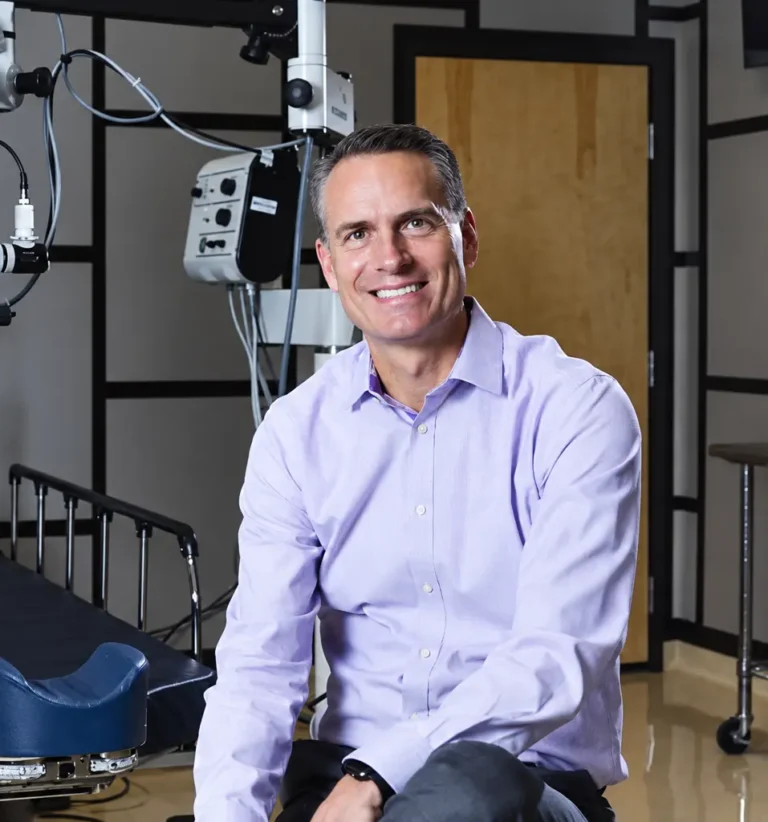
Glaucoma care at NV Eye Surgery is led by Dr. Peter DeBry, who manages complex glaucoma, and Dr. Luke Moore, a fellowship-trained glaucoma specialist, with testing and follow-up delivered by our clinical team at both offices.


Find Us
Glaucoma Treatment in Henderson & Las Vegas
Glaucoma testing and monitoring visits at both our Henderson and Northwest Las Vegas offices.
Coverage & Financing
Cost & Insurance
Office visits for eye problems like glaucoma are covered under your medical insurance rather than your vision plan. Where cost becomes a barrier, tell us, because we work around it.
Insurance Coverage
Glaucoma care is medical, not vision. Your particular plan determines your co-pay and deductible for office visits and procedures. We collect co-pays at the time of service.
- Common plans accepted include Medicare, Blue Cross Blue Shield, Cigna, Aetna, Culinary, UMR, Teachers, United HealthCare, Sierra Health and Life, and TriCare
- We take Medicare but cannot see Senior Dimensions or Humana Gold Medicare Advantage patients except in rare authorized cases
- Refraction for a glasses prescription is not covered by most medical plans and carries a separate charge
- Text a photo of your insurance card to (702) 935-5746 and our staff will confirm your options
Without Insurance
You can see one of our doctors even if you have no medical insurance or we are not listed on your plan. A lack of insurance should never stand between you and treatment for an eye disease.
- Many plans have out-of-network benefits you can submit claims against for partial reimbursement
- Paying cash per visit is an option, and a few monitoring visits a year may run only a few hundred dollars
- Free care and free medications can be arranged for patients who qualify for financial hardship
- VA community care may cover treatment with a referral from the Las Vegas VA Eye Clinic
Flexible financing available. We work with CareCredit to offer low- and no-interest payment plans for care not covered by insurance. Ask about your options at your visit. Results may vary. Individual results are not guaranteed. Financing subject to credit approval. See office for complete terms and conditions.
locationsCommon Questions
Frequently Asked Questions
What patients ask after a glaucoma diagnosis, and what glaucoma suspects ask before one.
If glaucoma has no symptoms, how would I know I have it?
You would not, and that is the whole problem. Early damage affects small areas of peripheral vision, it progresses very slowly, and your two eyes overlap enough that one can lose half its vision without you noticing. Only a thorough eye exam catches it.
What is a glaucoma suspect?
Someone whose optic nerve looks abnormal. That can be from early glaucoma, an old injury, or simply how the eye developed at birth. Diagnosis uses three pieces of information together: nerve appearance, eye pressure, and specialized testing. Repeat testing over time settles the question.
What is my target pressure?
A goal number your doctor chooses as a safe pressure for your eyes, based on how high the pressure was before treatment, how much damage has developed, and your age and medical conditions. Mild glaucoma generally targets 18 to 20, moderate 14 to 16, severe 12 to 14. Ask for yours.
How often do I need to be seen?
At least every six months, and some patients with uncontrolled glaucoma need checking every few weeks. On average expect your pressure checked about every four months, with dilation and nerve photographs yearly.
Can I check my eye pressure at home?
No. There are no accurate at-home eye pressure measurement devices. Pressure also fluctuates through the day, higher in the early morning and lower in the afternoon, which is why readings are taken at different times of day.
What is narrow angle glaucoma?
The angle is the small space where the iris meets the cornea, and the drain sits near its outer edge. In some eyes that space is very narrow, and under conditions like dim light or stress it can close off entirely. Fluid keeps being produced, pressure climbs over minutes to hours, and that is an angle closure attack.
Why does the visual field test feel so hard?
It is designed to find the dimmest light you can see, so missing some is expected. Keep staring straight ahead rather than hunting for the flashes, and press the button whenever you think you saw one. The computer retests any areas that need rechecking.
What if I cannot afford my medications?
Tell us. Dr. DeBry can arrange free care and free medications for patients who qualify for financial hardship. Glaucoma damage is permanent, so staying on treatment through a difficult stretch matters more than almost anything else you can do.
Ready When You Are
Schedule Your Free Consultation
Most patients see results within 24 hours. Consultations are available at all four locations, online scheduling takes less than two minutes.
Schedule Online