
NV Eye Surgery — EVO ICL Lens Implant
EVO ICL Surgery
in Las Vegas
The EVO ICL is an implantable collamer lens for patients with moderate to severe nearsightedness who want out of glasses without permanently altering the cornea. Over two million have been implanted worldwide.
- Corrects myopia from -3.0 through -20.0 diopters
- The cornea is never reshaped, so the lens can be removed
- UV protection is built into the lens material
Is This Right for You?
Am I a Candidate for EVO ICL Lens Implant?
The ICL is built for the prescriptions and corneal measurements that put LASIK out of reach. Patients told they are not laser candidates are frequently excellent ICL candidates.
High myopia and thin corneas are the two profiles this lens was designed for. If you are -6.0 or higher, have corneas too thin for a flap, or place real value on being able to reverse the decision later, the ICL often produces the best long-term outcome. One caveat worth stating plainly: the ICL is not available in the United States to treat farsightedness, so hyperopic patients are directed toward refractive lens exchange instead. Candidates are generally between 21 and 45 with a stable prescription.
The Procedure
What Is EVO ICL Lens Implant?
The EVO ICL, or implantable collamer lens, is placed inside the eye behind the iris and in front of the natural crystalline lens. Unlike LASIK and PRK, which reshape corneal tissue permanently, the ICL adds a lens without removing anything. That is the central distinction: the structure of the eye is left intact, and the lens can be removed if your circumstances change. Because the lens is foldable, it goes in through a small opening that needs no sutures, which is what makes recovery quick.
Preparation
Two microscopic openings are made in the iris beforehand. On the day of surgery the eye is numbed with a light topical or local anesthetic. No general anesthesia is used.
Incisions
The surgeon makes two side port incisions plus one main temporal incision, which is the critical one for inserting the lens.
Lens Placement
The folded EVO lens passes through the main incision and is positioned behind the iris and in front of the crystalline lens. One eye is treated at a time.
Same-Day Discharge
The opening is small enough to need no sutures. Drops or oral medication may be prescribed, and a visit is usually scheduled for the day after surgery.
Patient Reviews
What We Offer
EVO ICL Against Your Other Options
The ICL differs from laser correction in ways that go beyond how far it can correct. Reversibility, dry eye risk, and built-in UV protection all fall differently, and for a patient at -8.0 with thin corneas those differences decide the question.
EVO ICL
A lens added inside the eye, correcting to -20.0 diopters
- Corrects high myopia up to -20.0 diopters
- Compatible with thin corneas that rule out laser treatment
- Fully reversible, since the lens can be removed
- UV protection built into the lens, blocking 99% of UVA and UVB
- Far less dry eye risk, because corneal nerves are untouched
- Not available in the U.S. to treat farsightedness
The Reversible Option
LASIK or PRK
Permanent laser treatment of the corneal tissue
- Excellent results within the prescription range they cover
- A single procedure with no implant inside the eye
- Laser correction is limited to roughly -12.0 diopters
- Often not safe on thin corneas
- Permanent, with no path back if your needs change
- Dry eye is a common side effect afterward
Corneal Reshaping
Glasses or Contacts
Daily correction with no procedure involved
- Reversible every single day
- No surgical risk of any kind
- No prescription limit, but visual quality suffers at high correction
- Contact lenses cause dryness
- UV protection is optional rather than built in
No Surgery
The clear case for ICL is high myopia, thin corneas, or valuing reversibility. Below those thresholds, laser correction may serve you just as well at lower cost.
Step by Step
Your EVO ICL Lens Implant Journey
ICL candidacy assessment is more detailed than a LASIK screening, because the lens has to be sized to your eye.
1
Candidacy Assessment
- Complete eye health examination
- Corneal thickness mapping
- Prescription stability analysis
- Personal cost breakdown and financing options
- Same-day surgical scheduling if you qualify
2
Preparation
- Two microscopic openings made in the iris
- Lens sized and ordered for your eye
- Arrange for someone to drive you to and from surgery
- Pre-operative examination completed
- Eye drops administered on the day
3
Procedure Day
- A 20 to 30 minute surgical procedure
- Light topical or local anesthetic, no general anesthesia
- Side port and main temporal incisions made
- Lens inserted and positioned behind the iris
- One eye treated at a time
4
Recovery
- No sutures needed, which allows a quick recovery
- Drops or oral medication may be prescribed
- A follow-up visit is usually scheduled for the next day
- Many patients describe a rapid change in clarity
- Post-operative care included in the package
What to Expect
Expected EVO ICL Lens Implant Outcomes & Recovery
Patients frequently report seeing better after ICL than they ever did in glasses or contacts, which is a function of the lens material and where it sits in the eye.
What Patients Can Expect in the First 30 Days
- Arrange for someone to drive you to and from surgery
- A follow-up visit is usually scheduled for the day after surgery
- Drops or oral medication may be prescribed afterward
- Recovery is quick because the small opening needs no sutures
- One eye is treated at a time rather than both together
- Most patients report very little discomfort and no pain during the procedure
Informed Care
Safety & Risk Considerations
The safety and effectiveness of the ICL procedure have been established across more than two million implants worldwide. Unlike corneal refractive surgery, the EVO ICL does not permanently alter the structure of the eye and can be removed if needed.
Safety Profile
- Safety and effectiveness proven across more than two million implants worldwide
- The structure of the eye is not permanently altered, and the lens can be removed
- Collamer is biocompatible, attracting fibronectin that coats the lens and prevents the eye from treating it as a foreign object
- The slight negative ionic charge of collamer repels proteins in the eye, keeping the lens clear
- Nevada’s only accredited office-based surgery suite for ICL procedures
Possible Side Effects
- Very little discomfort and normally no pain during the procedure itself, though drops or oral medication may be prescribed afterward
- Vision needs time to settle, which is why a driver is required and a next-day visit is scheduled
- Glare, halos, and poor night vision occur far less often than with other lenses or procedures, but the possibility is not zero
- The lens can be removed if the eye does not tolerate it well or your needs change, which is itself part of the safety case
- Detailed side-effect counseling specific to your eyes happens at your consultation before surgery is scheduled
How We Minimize Risk
Sutureless Small-Incision Technique
The EVO lens folds, which lets it pass through a smaller opening. No sutures are required, and that is what allows the quick recovery.
Collamer Material Design
The lens is made from collamer, a collagen and polymer blend used exclusively in STAAR Surgical lenses. Because it contains collagen it is compatible with the natural chemistry of the eye.
The Longest ICL Experience in the State
Dr. DeBry was among the first surgeons nationally trained in Visian ICL implantation and the first in Nevada, giving him more experience with the technology than any other surgeon in the state.
Why NV EYE SURGERY
Why Have ICL Surgery Here
ICL is a technique where experience compounds, and this practice has had it longer than anyone else in the state.
The First in Nevada
Dr. DeBry was invited among the first groups nationally to train in Visian ICL implantation and was the first ophthalmologist in the state to do so.
The Only Suite of Its Kind
Our office holds the only accredited office-based surgery suite for ICL procedures in Nevada, which shortens the visit and lowers the cost.
Alternatives Evaluated Honestly
LASIK, PRK, and refractive lens exchange are all performed here. If one of them fits your eyes better than an ICL, that is what we will recommend.
Our Team
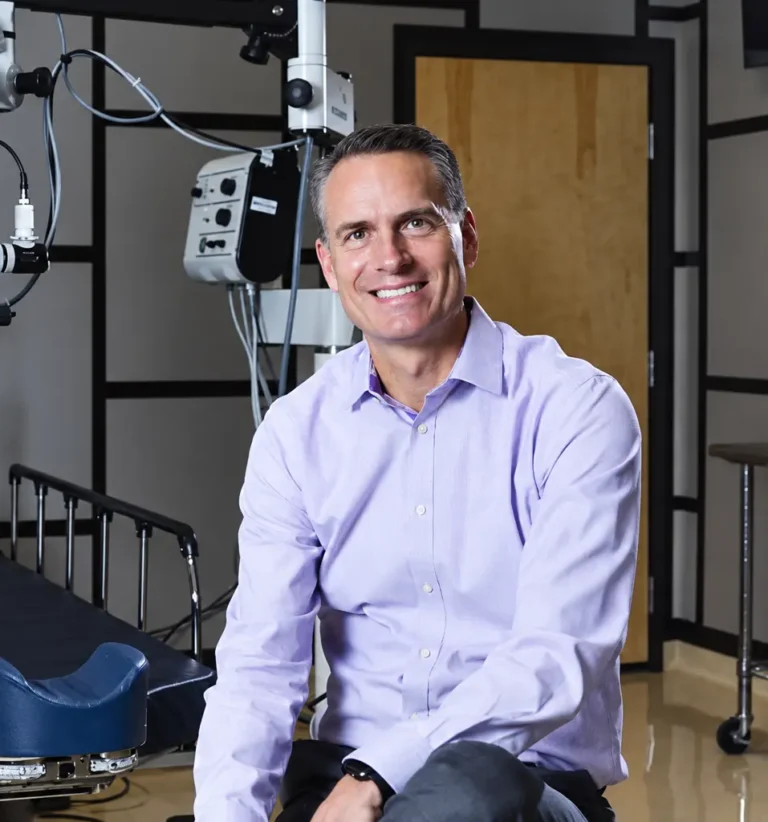
Meet Your ICL Surgeon
ICL implantation here is performed by the first ophthalmologist in Nevada trained in the technique, in the only accredited office-based ICL surgery suite in the state, with candidacy testing and follow-up handled by our clinical team.
Find Us
EVO ICL Lens Implant in Henderson & Las Vegas
ICL candidacy assessments at both offices, with surgery in our accredited office-based suite.
Coverage & Financing
Cost & Insurance
ICL is priced under the same no-hassle structure as our laser procedures, with the full breakdown given at your candidacy assessment.
Insurance and Payment
Refractive surgery is generally elective. If your plan covers any part of it, insurance pre-authorization can take two to three weeks, so start the process early.
- Insurance pre-authorization, if your plan requires it, can take two to three weeks, so start early
- HSA and FSA funds are commonly applied toward refractive surgery
- Self-pay accepted as cash, check, credit card, or money order
- CareCredit financing available through our office
- Our office is not a provider on vision insurance plans
What the Fee Includes
The same all-inclusive pricing we apply to LASIK, built so you can compare practices on equal footing rather than on a headline number.
- Consultation with testing to determine eye health and candidacy for each procedure
- Laser and lens fees included
- Post-operative care for up to six months
- Free enhancements in the first 12 months, with reduced fees stepping down through year five
Flexible financing available. We work with CareCredit to offer low- and no-interest payment plans for care not covered by insurance. Ask about your options at your visit. Results may vary. Individual results are not guaranteed. Financing subject to credit approval. See office for complete terms and conditions.
locationsCommon Questions
Frequently Asked Questions
What patients ask about having a lens implanted rather than a cornea reshaped.
Can the ICL be removed?
Yes, and that is much of the point. Unlike LASIK or PRK, which permanently reshape corneal tissue, the ICL adds a lens without removing anything. It can be safely removed if new technology emerges, if your needs change, or if it needs to come out temporarily during pregnancy.
How high a prescription can it correct?
The EVO ICL is designed for myopia from -3.0 through -20.0 diopters. Laser correction is generally limited to around -12.0. If you have been told your prescription is too strong for LASIK, this is usually the reason ICL comes up.
Will my vision actually be better than with glasses?
Many patients report exactly that. In clinical data, 49% of recipients gained one or more lines of best-corrected vision, meaning someone seeing 20/30 in glasses improved to 20/20 afterward. It relates to the lens material and where in the eye it sits.
Does the ICL cause dry eye?
Dry eye is much less of a concern with the ICL. Dry eye after LASIK happens because corneal nerves are cut during flap creation, and the ICL leaves the cornea alone, which is why it and PRK are the procedures we recommend for patients who already have significant dry eye symptoms.
What is collamer?
A material made exclusively for STAAR Surgical lenses, its name combining collagen and polymer. The collagen makes it compatible with the natural chemistry of your eye, and its light transmission is nearly identical to the human crystalline lens.
How long does the procedure take?
Roughly 20 to 30 minutes. Your eye is numbed with a topical or local anesthetic, the lens is inserted through a small temporal incision, and no sutures are needed. One eye is treated at a time, and you will need a driver.
Am I a candidate if I am farsighted?
Not for ICL, which is not available in the United States to treat hyperopia. Refractive lens exchange is the procedure that addresses farsightedness above +3.00, and we perform that here as well.
Ready When You Are
Schedule Your Free Consultation
Most patients see results within 24 hours. Consultations are available at all four locations, online scheduling takes less than two minutes.
Schedule Online