
NV Eye Surgery — Cataract Surgery
Cataract Surgery
in Las Vegas & Henderson
Over 24 million Americans past 40 have cataracts. Modern surgery does not just restore your vision, it frequently gives you better vision than you have had in years, and here it happens in our own surgical suite.
- Typically 10 to 15 minutes per eye, home the same day
- Nevada’s only office-based comprehensive cataract surgery center
- Most patients save $1,000 or more compared with hospital facilities
Is This Right for You?
Am I a Candidate for Cataract Surgery?
Patients often ask when the right time is to remove a cataract. The answer is simpler than expected: when you feel dissatisfied with your vision. You do not need to wait until a cataract is ripe.
If cataracts are interfering with things you need or enjoy doing, it is time to consider surgery. Many people dismiss these changes as just getting older, which delays treatment for years. To be covered by insurance the cataract does need to be causing symptoms that interfere with your daily activities, which is a standard nearly every patient who feels ready already meets.
The Procedure
What Is a Cataract?
Think of the natural lens inside your eye as a window. When you are younger that window is crystal clear. A cataract is that window slowly fogging over: the lens is made mostly of water and protein, and with age those proteins begin clumping together into cloudy areas that grow larger over time. Light still gets through, but everything turns hazy, dim, or blurry, colors fade, lights develop halos, and night vision becomes particularly difficult. Cataract surgery removes that clouded lens and replaces it with a clear artificial one, which can also correct focusing problems you have had for decades.
Anesthesia and Comfort
The procedure is performed under local anesthesia with sedation. Most patients report only slight pressure rather than pain.
Removing the Cataract
A small ultrasound probe liquefies and removes the clouded lens through an incision of 2.2mm or smaller. Surgery typically takes 10 to 15 minutes per eye.
Implanting Your Lens
A clear artificial lens is placed where the natural lens was, with its type and power chosen in advance around your daily activities.
Laser-Assisted Option
Laser cataract surgery makes the corneal incisions and the opening on the lens surface with a laser, and can treat astigmatism at the same time. It carries an additional cost.
Patient Reviews
Lens Options
Standard, Vivity, or PanOptix?
Twenty years ago every cataract patient received the same lens. Now there are several, and the choice belongs to you. There are two things to settle: the type of lens and its power. There is also no way to try a lens before surgery, which is why the conversation beforehand matters so much.
Standard Monofocal
Excellent clarity at one distance, no extra cost
- A high-quality clear lens with excellent vision at one distance
- The focal point can be set for distance, intermediate, or near
- No extra out-of-pocket cost beyond your standard coverage
- An aspheric monofocal is a strong choice if night glare bothers you and you don’t mind glasses for reading
- Glasses will be needed for the distances the lens is not set for
- A limited range of focus overall
No Upgrade Cost
Vivity
Extended depth of focus with preserved contrast
- A better range of focus than a standard monofocal
- Minimal glare with a wider range of focus, a good fit if glare bothers you but you want fewer glasses
- Does not reduce contrast, which makes it ideal if glare is your main cataract symptom
- The better choice for eyes with mild glaucoma, diabetic retinopathy, or macular pucker
- Does not focus as close as PanOptix, so reading glasses may still be needed for small print
- Considered high-technology, so insurance does not cover the added cost
Best for Imperfect Eyes
PanOptix
The first FDA-approved trifocal, three focal points
- Three focal points rather than the two most multifocals offer
- In clinical study, 80.5% of recipients never used glasses in the prior week
- 99% of study patients would choose the same lens again
- Our general recommendation for patients with a healthy eye
- Some glare and halos when driving at night
- Best for healthy eyes with little astigmatism and a strong desire to be free of glasses
Widest Range
Multifocal and extended depth of focus lenses are newer technology, but newer is not automatically better. Each lens has positives and negatives. Decide what matters to you before deciding to spend more.
Have astigmatism? A toric version of any of these lenses can correct it at the same time, often letting patients see clearly without glasses for the first time. Smaller amounts can be treated with limbal relaxing incisions instead. Both carry an added cost.
Step by Step
Your Cataract Surgery Journey
Most of the decision-making happens before surgery day, and most of it concerns which lens goes into your eye.
1
Consultation
- Comprehensive eye examination and cataract evaluation
- Measurements taken to calculate lens power
- Eye health checked, since disease affects lens eligibility
- Insurance benefits verified and costs explained upfront
- All lens options reviewed against your daily activities
2
Choosing Your Lens
- Standard monofocal lenses carry no extra out-of-pocket cost
- Toric lenses treat astigmatism at a single distance
- Multifocal and extended depth of focus lenses reduce glasses dependence
- Monovision and blended vision explained as monofocal strategies
- Trade-offs in glare and contrast discussed honestly
3
Surgery Day
- Local anesthesia with sedation, not general anesthesia
- Roughly 10 to 15 minutes of surgery per eye
- Plan on two to three hours at our facility in total
- No hospital stay, you recover at home
- Arrange a driver for the day
4
Recovery
- Most patients notice clearer vision within 24 to 48 hours
- Eye drops prevent infection and reduce inflammation
- Avoid heavy lifting and swimming during the first week
- Normal daily activities resume within two to three days
- Healing completes in four to six weeks, vision settles by eight
What to Expect
Expected Cataract Surgery Outcomes & Recovery
Cataract surgery is one of the most successful procedures in all of medicine, with a 98% success rate. Recovery is quicker than most patients expect.
What Patients Can Expect in the First 30 Days
- Plan on two to three hours at our facility for preparation and recovery
- Arrange for a driver, since you cannot drive yourself home
- Vision improvement begins within 24 to 48 hours
- Eye drops are prescribed to prevent infection and reduce inflammation
- Avoid heavy lifting and swimming during the first week
- Follow-up appointments continue through the 90 days included in your fee
Informed Care
Safety & Risk Considerations
Cataract surgery is among the most successful procedures in medicine, with a 98% success rate, and our surgical suite maintains a 99.9% complication-free rate. Comprehensive pre-surgical evaluation happens before anything is scheduled.
Safety Profile
- A 98% success rate, making cataract surgery one of the most successful procedures in all of medicine
- A 99.9% complication-free surgery rate in our facility
- Minimally invasive incisions of 2.2mm or smaller
- Comprehensive pre-surgical health evaluation, with a board-certified anesthesiologist available if needed
- Latest generation surgical microscopes and advanced IOL calculation technology
Possible Side Effects
- Slight pressure during the procedure, which is what most patients report rather than pain
- Eye drops are needed afterward to prevent infection and reduce inflammation, unless you choose the dropless option
- Glare and halos at night with a multifocal lens, along with slightly reduced contrast in dim lighting
- Vision fluctuates during the first week before stabilizing, with final vision settling six to eight weeks out
- Because lens power comes from mathematical formulas applied to biological measurements, there can be small inaccuracies in the result
How We Minimize Risk
Lens Matched to Eye Health
Multifocal lenses are not recommended for eyes with glaucoma, diabetic retinopathy, macular edema, or macular degeneration, even in early stages. Those eyes are directed toward Vivity or a monofocal.
Emergency Protocols on Site
A board-certified anesthesiologist is available when needed, with emergency protocols and immediate post-operative care built into the office-based suite.
Counseling Before Upgrading
Some practices push premium lenses as simply better. We walk through the actual trade-offs first, because for a patient who does not mind reading glasses a monofocal may give sharper vision.
Why NV EYE SURGERY
Why Choose NV Eye Surgery for Cataract Care
The surgical setting is the unusual part. Very few practices anywhere operate a comprehensive cataract suite inside their own office.
Nevada’s Only Office-Based Center
We were among the first practices in the country to develop the techniques and protocols for safe office-based eye surgery, and patients often save $1,000 or more per procedure as a result.
Patients Travel Here to Save
Because self-pay cataract surgery is affordable in our office, patients come from Alaska, Texas, California, Arizona, Utah, and New Mexico for their procedures.
Premium Lens Experience
PanOptix, Vivity, toric, and aspheric monofocal lenses are all offered, with the counseling to match one to your eye rather than to a price point.
Our Team
Meet Your Cataract Surgeon
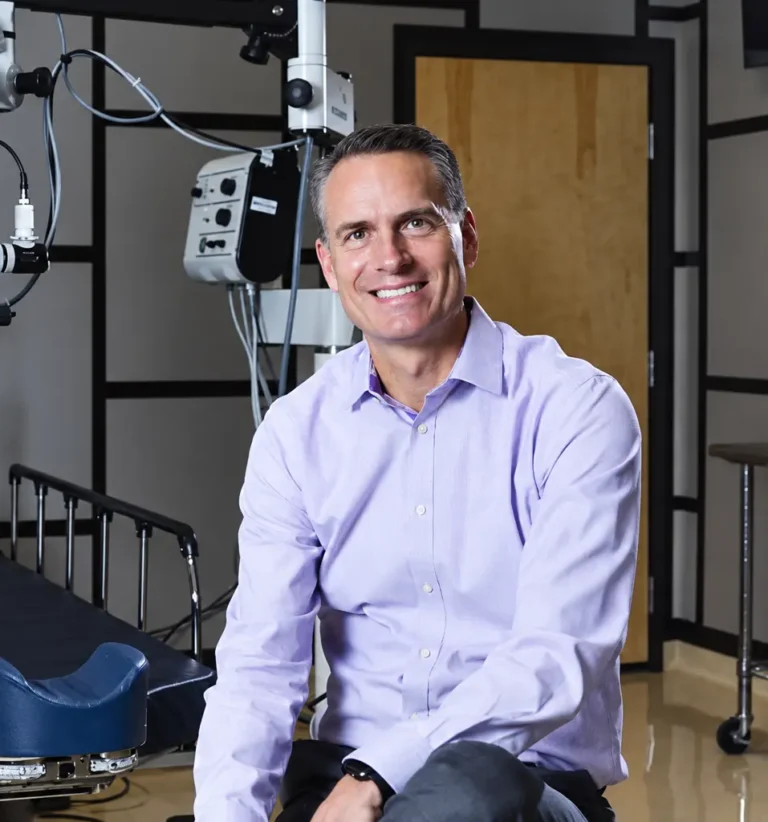
Cataract surgery here is performed by a board-certified, fellowship-trained ophthalmologist who personally evaluates every patient and selects the lens with them. Pre-operative measurement and post-operative care are handled by our clinical team at both offices.

Find Us
Cataract Surgery in Henderson & Las Vegas
Cataract consultations and follow-up care at both our Henderson and Northwest Las Vegas offices.
Coverage & Financing
Cost & Insurance
A cataract is a medical problem, not a vision problem, which means cataract surgery is a covered procedure under Medicare and other medical plans. The extras are where costs appear.
Insurance and Medicare
Some patients assume a cataract falls under vision insurance. It does not. Coverage includes the surgeon fee, the anesthesia fee, and the facility fee, provided the cataract is causing symptoms that interfere with daily activities.
- Medicare and most medical plans cover standard cataract surgery, with your usual co-pay and deductible
- We take Medicare but cannot see Senior Dimensions or Humana Gold Medicare Advantage patients except in rare authorized cases
- Common plans accepted include Blue Cross Blue Shield, Cigna, Aetna, Culinary, UMR, Teachers, United HealthCare, Sierra Health and Life, and TriCare
- Not covered: laser-assisted surgery, toric and multifocal lenses, limbal relaxing incisions, and ORA technology
Self-Pay and Ways to Save
Cash-pay cataract surgery here is usually $1,000 less than any other clinic in Las Vegas or Henderson, because we operate in our own office-based suite rather than a hospital or ASC. Prices include surgery and 90 days of post-operative care with no hidden costs.
- Dropless surgery avoids post-operative drops, saving $45 to $300 depending on your plan
- Both eyes on the same day, called bilateral sequential surgery, saves up to 25%
- Our office-based suite can save up to $500 per surgery on a high deductible
- All payment forms accepted, plus CareCredit financing, 0% financing on premium lens upgrades, and HSA and FSA funds
Flexible financing available. We work with CareCredit to offer low- and no-interest payment plans for care not covered by insurance. Ask about your options at your visit. Results may vary. Individual results are not guaranteed. Financing subject to credit approval. See office for complete terms and conditions.
locationsCommon Questions
Frequently Asked Questions
The questions our Las Vegas and Henderson cataract patients ask most often, gathered from both consultation and pre-operative visits.
How do I know if I need cataract surgery?
If cataracts are interfering with activities you need or enjoy, such as driving, reading, or watching TV, it is time to consider surgery. You do not need to wait until the cataract is ripe. The self-test takes a couple of minutes and gives you a starting point.
Is cataract surgery covered by insurance?
Yes. Medicare and most insurance plans cover standard cataract surgery, because a cataract is a medical problem rather than a vision problem. Your usual co-pay and deductible apply. Premium lens upgrades carry additional costs that we explain during your consultation.
Does cataract surgery hurt?
No. The procedure is performed under local anesthesia with sedation, and most patients report feeling only slight pressure rather than pain.
How long does surgery take?
The surgery itself typically takes 10 to 15 minutes per eye. Plan on being at our facility for about two to three hours in total, covering preparation and recovery.
When will I see improvement?
Most patients notice clearer vision within 24 to 48 hours, with continued improvement through the first week as the eye heals. Complete healing takes four to six weeks, and final vision stabilizes around six to eight weeks.
What can I do after surgery?
You can return to most normal activities the day after surgery, though avoid heavy lifting and swimming in the first week. Most patients are back to their usual routine within two to three days. We provide specific guidelines for your eye.
Should I pay extra for a premium lens?
Only if avoiding glasses genuinely matters to you and you can accept some glare at night and slightly reduced contrast in certain lighting. If you do not mind reading glasses, a monofocal lens may actually give you sharper, clearer vision than a multifocal.
Can astigmatism be corrected at the same time?
Yes. Low amounts are treated with limbal relaxing incisions using a calibrated diamond blade or a laser. Larger amounts are corrected with a toric lens implant. Insurers treat astigmatism correction as elective, so it carries an additional out-of-pocket cost.
What is laser-assisted cataract surgery?
A laser makes the corneal incisions, creates a perfectly circular opening on the lens surface, and can treat astigmatism, with precision under a hundredth of a millimeter. It costs more. Medicare only permits an additional charge for the astigmatism treatment portion, so not every patient qualifies.
How much is surgery without insurance?
Our cash-pay pricing is usually $1,000 less than any other clinic in Las Vegas or Henderson, because surgery happens in our office-based suite instead of a hospital or ambulatory surgery center. That price covers surgery plus 90 days of post-operative care.
Which lens is right for me?
- Don’t mind glasses, especially for reading: standard monofocal set for distance
- Want fewer glasses, and night glare is a concern: Vivity
- Want the most freedom from glasses, and the eye is healthy: PanOptix
- Have astigmatism: toric lens or limbal relaxing incisions
- Already wear monovision contacts: monofocal lenses set for monovision
Ready When You Are
Schedule Your Free Consultation
Most patients see results within 24 hours. Consultations are available at all four locations, online scheduling takes less than two minutes.
Schedule Online