
NV Eye Surgery — LASIK
Wake Up
Seeing Clearly. No Glasses.
Dr. Peter DeBry has performed thousands of vision correction procedures using topography-guided laser technology that maps your cornea before a single pulse is fired.
- Contoura Vision maps 22,000 points across your cornea
- All-laser procedure, typically finished in about 15 minutes
- Most patients are back at work within one to two days
Is This Right for You?
Am I a Candidate for LASIK?
Most people who wear glasses or contacts turn out to be good LASIK candidates. Dr. DeBry confirms candidacy at a free comprehensive consultation that includes corneal thickness measurement and topographic mapping.
Not everyone should have LASIK, and we will tell you if you should not. Uncontrolled dry eye, a prescription that is still shifting, or a cornea that is too thin all rule LASIK out. Those patients are usually still excellent candidates for PRK, EVO ICL, or refractive lens exchange, and we evaluate all four at the same visit. Age is rarely the barrier people expect: we treat patients from 18 through 65 and beyond.
The Procedure
What Is LASIK?
LASIK reshapes the cornea so that light focuses correctly on the retina, correcting the nearsightedness, farsightedness, and astigmatism that make glasses or contacts necessary. The eye works much like a camera. When its natural shape prevents light from landing in sharp focus, correction is needed. LASIK changes that shape permanently. At NV Eye Surgery the entire procedure is performed with lasers rather than blades, and every treatment is built from a topographic map of your own cornea instead of a generic prescription.
Getting Comfortable
You lie back on the surgical bed and numbing drops are placed in the eye. No needles and no injections are used. This part takes about two minutes.
Creating the Flap
The Ziemer LDV Z4 femtosecond laser creates a thin, precise corneal flap in roughly 15 seconds per eye. You feel gentle pressure but no pain.
Reshaping the Cornea
The Alcon WaveLight EX500 excimer laser reshapes the cornea in 15 to 45 seconds per eye. Many patients notice improvement before they leave the bed.
Repositioning the Flap
The flap is gently laid back into place, where it heals on its own. No stitches are needed. This final step takes about 30 seconds.
Patient Reviews
Your Options
LASIK, PRK, or EVO ICL?
LASIK is the most common choice, but it is not the only one, and it is not always the best one. NV Eye Surgery offers all three procedures, which means the recommendation you get is based on your corneal anatomy rather than on what the practice happens to own.
LASIK
Flap-based laser correction with the fastest visual recovery
- A thin corneal flap is created with the Ziemer LDV Z4 femtosecond laser
- The WaveLight EX500, the fastest FDA-approved excimer laser, reshapes the cornea
- Flap heals naturally with no stitches
- Most patients return to work in one to two days
- Requires adequate corneal thickness
- Cutting corneal nerves raises the risk of temporary dry eye
Most Common Option
PRK
Surface laser correction with no flap created at all
- No flap, so none of the flap-related complications are possible
- A strong option for thinner corneas and for patients with dry eye
- Less chance of dry eye problems because nerves are not cut
- Same excimer laser and same corneal reshaping as LASIK
- The epithelium takes three to four days to grow back
- More discomfort and a longer wait for clear vision
Better for Thin Corneas
EVO ICL
An implantable lens rather than any corneal reshaping
- Corrects myopia from -3.0 all the way to -20.0 diopters
- The cornea is never reshaped, so the lens can be removed later
- UV protection is built into the lens material
- Works for thin corneas that rule out both LASIK and PRK
- An intraocular procedure rather than a surface treatment
For High Myopia
Corneal thickness, prescription range, and dry eye history drive this decision far more than cost does. Dr. DeBry will tell you which procedure fits your eyes and why.
Step by Step
Your LASIK Journey
From the two-minute online self-test through your final follow-up visit, here is what the process actually looks like.
1
Self-Test and Consultation
- Two-minute LASIK/ICL self-assessment online
- Full eye health examination with Dr. DeBry
- Corneal thickness and topographic mapping
- Prescription stability reviewed
- PRK, ICL, and RLE discussed if LASIK is not the fit
2
Planning Your Treatment
- Contoura Vision map built from 22,000 corneal data points
- Treatment customized to your eye, not your prescription alone
- One eye or both eyes on the same day is your choice
- All-inclusive fee explained with no add-ons
- Surgery date scheduled
3
Procedure Day
- Optional relaxation medication provided by our team
- Numbing drops only, no needles or injections
- Ziemer LDV Z4 creates the flap in about 15 seconds per eye
- WaveLight EX500 reshapes the cornea in 15 to 45 seconds
- Arrange a driver, you should not drive home
4
Recovery and Follow-Up
- Vision keeps sharpening over the first 24 to 48 hours
- Most patients return to work within one to two days
- Normal activities resume within about a week
- Post-operative care included for up to six months
- Enhancements are free during the first 12 months
What to Expect
Expected LASIK Outcomes & Recovery
Vision keeps improving over the first day or two rather than arriving all at once. Here is what to expect during that window and afterward.
What Patients Can Expect in the First 30 Days
- Vision sharpens noticeably over the first 24 to 48 hours
- Arrange a driver, you should not drive yourself home
- Avoid rubbing your eyes, which can displace the healing flap
- Shower and bathe normally, just keep soap and water out of the eyes
- Stay out of pools and hot tubs for a few weeks
- Skip visually demanding work for the first few days
Informed Care
Safety & Risk Considerations
LASIK and PRK have a track record of success stretching back more than 15 years, and the technology improves every year. That said, every eye responds differently and every surgical procedure carries some risk. Dr. DeBry will walk through all of it with you before anything is scheduled.
Safety Profile
- An all-laser approach removes the blade-related complications associated with mechanical microkeratomes
- Real-time eye tracking keeps the laser centered even if your eye moves during treatment
- Redundant safety systems monitor the treatment continuously
- Every treatment is reviewed with you in detail before surgery is scheduled
- Pre-operative corneal testing rules out the anatomy that makes LASIK unsafe
Possible Side Effects
- Increased glare or halos at night, most likely in patients with larger pupils, larger corrections, or night vision symptoms before surgery
- Dry eye symptoms for up to three months while the corneal nerves recover, usually managed with artificial tears
- Infection is rare, with a risk of less than 1 in 1,000, and antibiotic drops are used to prevent it
- Corneal ectasia, a weakening and change in corneal shape, which pre-operative testing is designed to prevent
- Over-correction or under-correction, correctable with an enhancement after at least three months of healing
How We Minimize Risk
Topography-Guided Planning
Contoura Vision builds a 22,000-point map of your cornea, so the correction is designed around your actual anatomy rather than a prescription number.
Honest Candidacy Screening
Patients with thin corneas or uncontrolled dry eye are steered toward PRK or EVO ICL instead. We would rather move you to a different procedure than push through the wrong one.
Your Choice on Timing
Treating one eye at a time is the safest option, because it lets Dr. DeBry assess the first result and adjust laser power before the second eye. Same-day treatment of both eyes is available with an additional consent.
Why NV EYE SURGERY
LASIK in Las Vegas: Why Patients Choose Us
Southern Nevada has no shortage of LASIK advertising. Here is what actually differs about having the procedure here.
Two Decades of Refractive Surgery
Dr. DeBry has performed these procedures since 2005, longer than any other full-time surgeon in Las Vegas, and was the first ophthalmologist in Nevada trained in ICL implantation.
Every Technology Under One Roof
The WaveLight EX500, the Ziemer LDV Z4, and Contoura Vision topography-guided treatment, plus PRK, EVO ICL, and refractive lens exchange as alternatives when LASIK is not right.
Pricing You Can Actually Compare
One fee covering consultation, laser, six months of post-operative care, and free enhancements in the first year. Nothing gets added after you commit.
Our Team
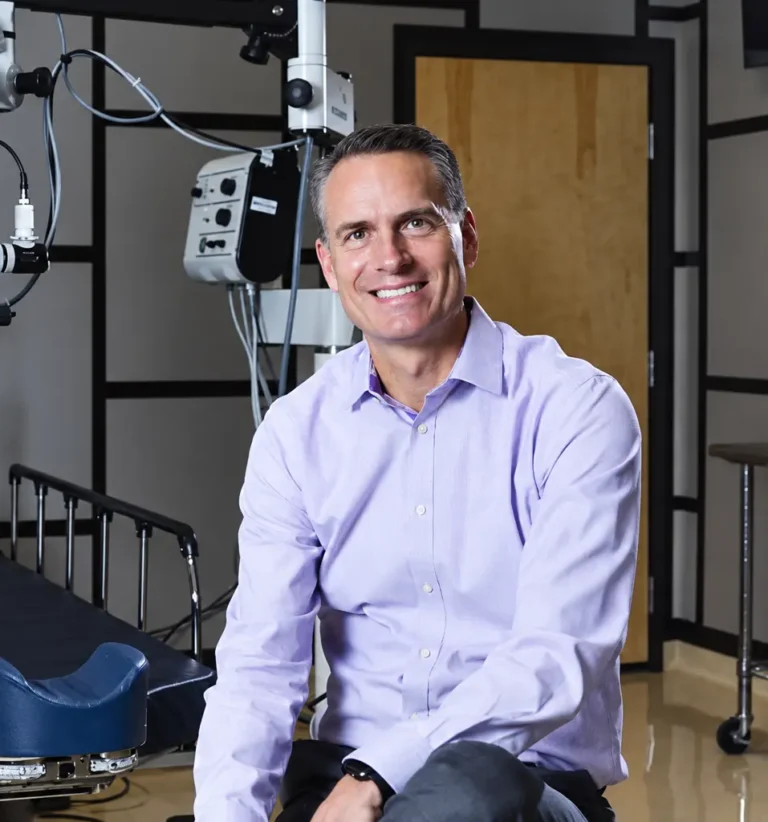
Meet Your LASIK Surgeon
Refractive surgery at NV Eye Surgery is performed by a fellowship-trained ophthalmologist who has been doing these procedures in Las Vegas since 2005. Consultations and post-operative care are handled by our full clinical team across both offices.
Find Us
LASIK in Henderson & Las Vegas
LASIK consultations and post-operative visits at both our Henderson and Northwest Las Vegas offices.
Coverage & Financing
Cost & Insurance
LASIK is elective, so it sits outside standard medical coverage. What we can promise is a single all-inclusive fee with nothing added later.
Insurance and Payment
Our office is not a provider on vision insurance plans and does not bill them for refractive surgery. Medical insurance covers eye disease, not elective vision correction.
- Vision plans cover glasses, contacts, and routine exams, none of which we provide
- Check with your employer benefits coordinator for any refractive surgery discount
- Self-pay accepted in every form: cash, check, credit card, or money order
- CareCredit financing is available through our office
What the Fee Includes
Some LASIK centers advertise a low headline price and then add services until the real number is much higher. Our fee is quoted once and covers everything below.
- Consultation and all testing to determine eye health and candidacy
- Laser and lens fees with no separate technology charge
- Post-operative care for up to six months
- Free enhancements during the first 12 months, then 60% off in year two, 40% in year three, 20% in year four
Flexible financing available. We work with CareCredit to offer low- and no-interest payment plans for care not covered by insurance. Ask about your options at your visit. Results may vary. Individual results are not guaranteed. Financing subject to credit approval. See office for complete terms and conditions.
locationsCommon Questions
Frequently Asked Questions
The questions that come up at nearly every LASIK consultation in our Las Vegas and Henderson offices.
Does LASIK hurt?
Most patients report no pain. Numbing drops go in before anything begins, and you feel gentle pressure during flap creation rather than discomfort. Patients frequently describe it as easier than a dental visit. Some mild irritation in the hours afterward is normal.
How long does recovery take?
Most patients return to work within one to two days and to normal activities within about a week. Vision improves immediately and keeps sharpening over the following weeks. Avoid rubbing your eyes, and stay out of pools and hot tubs for a few weeks.
Am I too old for LASIK, or is my prescription too high?
We treat patients from 18 through 65 and beyond, and advanced technology handles severe prescriptions that used to be excluded. Contoura Vision is particularly effective on astigmatism. The self-test takes two minutes and gives you a starting answer.
Should I have both eyes done on the same day?
That is your call. Doing them on separate days is safest, because it lets Dr. DeBry evaluate the first outcome and fine-tune laser power before treating the second eye. Many patients cannot take the extra time off, and same-day treatment is available with an additional consent form.
What if I need reading glasses later?
Presbyopia affects everyone after about 45 and is unrelated to whether you had LASIK. Monovision correction and other options exist, and we can discuss them at your consultation or later in life.
What if I need an enhancement?
Corneal shape can regress over time, and some eyes do not land exactly on target the first time. Enhancements are included in the original surgery fee for the first 12 months. After that the fee scales down by year, reaching a 15% friends and family discount from year five onward.
Does insurance cover LASIK?
Standard medical and vision plans do not, because LASIK is considered elective. Some employer plans include a refractive surgery discount worth checking on. CareCredit financing is available through our office.
How much does LASIK cost?
The fee varies with your eyes and your treatment, and it’s quoted once at your consultation. Most patients find significant long-term savings compared with glasses and contacts. Use our LASIK savings calculator for a personalized estimate, or see our no-hassle pricing.
Ready When You Are
Schedule Your Free Consultation
Most patients see results within 24 hours. Consultations are available at all four locations, online scheduling takes less than two minutes.
Schedule a Free Consultation